Complete Dental Implants Guide: Single Tooth to Full-Arch
An exhaustive breakdown of every implant option — single implants, snap-on overdentures, All-on-4/6, zygomatic implants, and full-arch zirconia restorations.
⚠️ For educational purposes only
We are not dentists and do not provide dental or medical advice. This article is for general information only — always consult a licensed dentist for diagnosis, treatment, and personalized recommendations.
Dental implants have evolved into one of the most successful procedures in modern medicine, with documented success rates of 95–98% over 10+ years. Today's patients have far more options than the traditional single-tooth implant — from snap-in overdentures that lock in place to full-arch zirconia prostheses that replace every tooth in a single jaw with a permanent, lifelike result. This guide walks through every option, from least to most extensive, so you can have an informed conversation with your surgeon.
How Dental Implants Actually Work
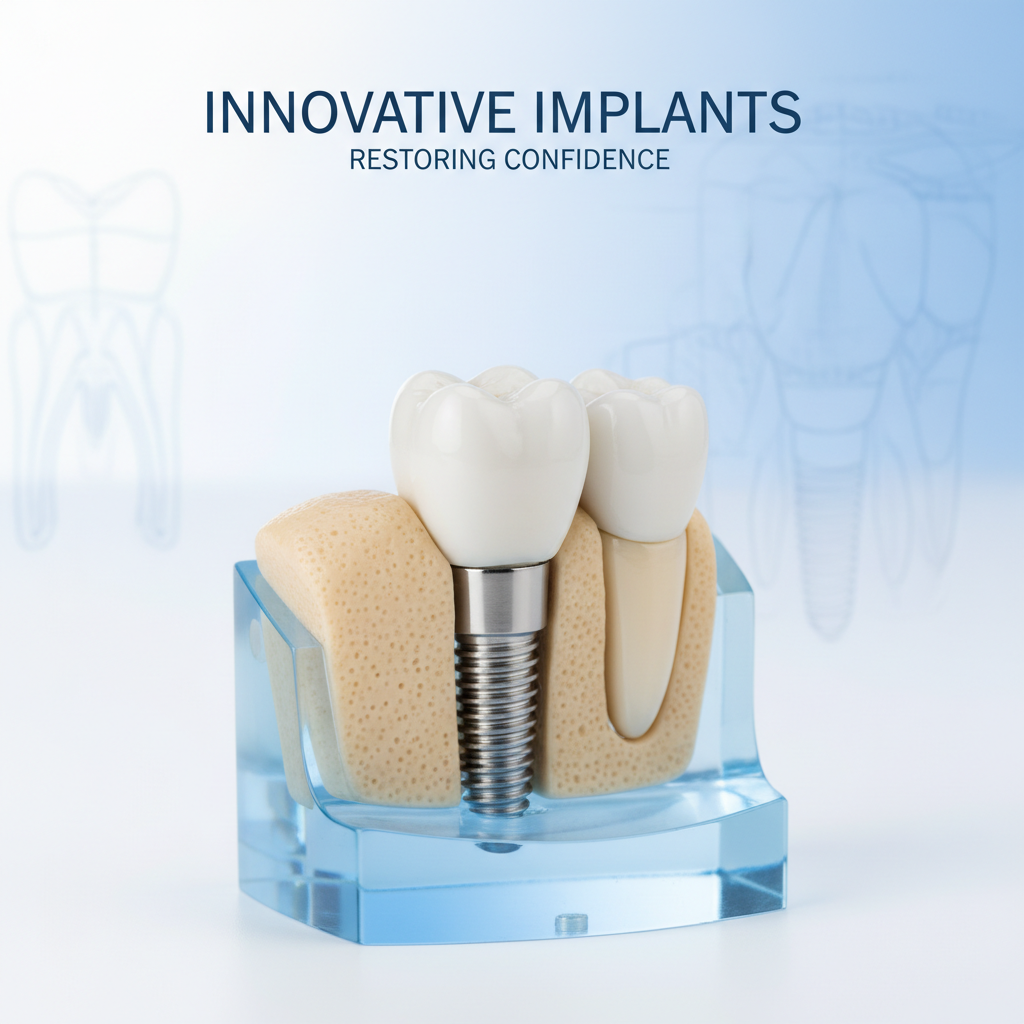
A dental implant is a small, screw-shaped titanium (or sometimes zirconia) post that's surgically placed into the jawbone. Over 3–6 months, bone cells grow directly onto the implant surface in a process called osseointegration — fusing the implant to your bone. Once integrated, the implant functions as an artificial tooth root and can support a crown, a bridge, or a complete denture.
Modern implants use grade 4 or 5 titanium with specially treated (acid-etched, sandblasted, or laser-textured) surfaces that dramatically accelerate bone integration. Most implants today integrate in 8–16 weeks, compared to 4–6 months in earlier decades.
The 3 Components of Every Implant
Are You a Candidate?
The single biggest factor is bone volume — implants need solid bone to anchor into. After tooth loss, jawbone shrinks rapidly: roughly 25% in the first year and continues over time. Many patients who have been missing teeth for years require bone grafting before implants are possible. Other candidacy factors include:
- •Healthy gums and good oral hygiene
- •Adequate bone height and width (or willingness to graft)
- •Non-smoker (or willing to quit)
- •Controlled diabetes (HbA1c < 7)
- •No active periodontal disease
- •Realistic expectations and commitment to maintenance
- •Heavy smoking (3–10× higher failure rate)
- •Uncontrolled diabetes
- •Osteoporosis on IV bisphosphonates
- •Active radiation therapy in jaws
- •Severe bruxism without splint protection
- •Pregnancy (typically delay until after)
Option 1: Single Tooth Implant
The single implant + crown is the gold standard for replacing one missing tooth. Unlike a bridge, it doesn't require grinding down the adjacent teeth, and it preserves the bone underneath.
Step-by-Step Process
Single Implant Costs
| Procedure / Option | Low | High | Avg |
|---|---|---|---|
| Implant fixture (surgery) | $1,500 | $3,000 | $2,200 |
| Abutment | $300 | $750 | $500 |
| Crown (porcelain or zirconia) | $1,000 | $2,500 | $1,500 |
| Single implant — TOTAL package | $3,000 | $6,000 | $4,500 |
| CBCT 3D scan | $150 | $500 | $300 |
| Bone graft (socket preservation) | $300 | $800 | $500 |
| Sinus lift (lateral window) | $1,500 | $4,000 | $2,700 |
U.S. national average ranges (without insurance), based on the ADA Health Policy Institute Survey of Dental Fees, FAIR Health Consumer, and CareCredit cost guides. Actual prices vary by region, provider, and case complexity — typically by 30–70%. Use these figures as a benchmark, then compare local quotes.
Option 2: Implant-Supported Bridge (2–4 Missing Teeth)
When you're missing several teeth in a row, you don't need an implant for every tooth. Two implants can support a 3- or 4-tooth bridge — saving cost and surgery while still avoiding damage to adjacent natural teeth.
| Span | Implants needed | Typical cost |
|---|---|---|
| 3-tooth bridge | 2 implants | $6,000–$10,000 |
| 4-tooth bridge | 2–3 implants | $8,000–$13,000 |
| 5–6 tooth bridge | 3 implants | $10,500–$16,000 |
Option 3: Snap-On Overdentures (Implant-Retained)
If you currently wear a traditional denture (or are facing one), snap-on overdentures are a transformative upgrade. Just 2–4 implants per arch hold a removable denture firmly in place. The denture "snaps" onto the implants using locator attachments or a bar — eliminating slippage, dramatically improving chewing power, and slowing bone loss.
Locator vs. Bar Overdentures
| Feature | Locator (ball) attachments | Bar-supported |
|---|---|---|
| Implants needed | 2–4 | 4 |
| Stability | Good | Excellent |
| Chewing efficiency restored | 60–70% | 75–85% |
| Cost (per arch) | $5,000–$12,000 | $10,000–$18,000 |
| Maintenance | Replace nylon caps every 1–2 yrs | Bar very durable |
| Cleaning | Easy — remove daily | Easy — remove daily |
| Tongue space | More open | Slightly bulkier |
Removable vs. Fixed: A Critical Distinction
Overdentures are removable — you take them out daily for cleaning and at night. They still cover the roof of your mouth (uppers) or the gum ridge (lowers) for support. If you want a prosthesis that never comes out and feels closer to natural teeth, you need a fixed full-arch option (All-on-4/6, below).
Option 4: All-on-4, All-on-6, All-on-X
All-on-4 (developed by Nobel Biocare in the 1990s) replaces every tooth in a jaw with a fixed bridge supported by just 4 implants. The two front implants are placed vertically; the two back implants are tilted at 30–45 degrees to anchor in denser bone and avoid the sinus or nerve. All-on-6 adds two more implants for cases requiring extra support. "All-on-X" is the generic umbrella term covering both.
What "All-on-4" Actually Includes
All-on-4 vs. All-on-6: Which Do You Need?
| Factor | All-on-4 | All-on-6 |
|---|---|---|
| Implants per arch | 4 | 6 |
| Bone needed | Minimal — designed for limited bone | Moderate |
| Best for | Bone-deficient jaws, budget-conscious | Lower jaw with good bone, heavy bite forces |
| Cost (per arch) | $18,000–$30,000 | $22,000–$38,000 |
| Long-term failure risk | Higher if one implant fails | Lower — redundancy if one fails |
| Cantilever length | Longer (more flex) | Shorter (more rigid) |
| Surgery time | 2–4 hours | 3–5 hours |
Final Prosthesis Materials (After 3–6 Months)
| Material | Lifespan | Aesthetics | Cost upgrade |
|---|---|---|---|
| PMMA (acrylic) — temporary | 1–2 years | Good | Included |
| Acrylic hybrid (titanium bar + acrylic teeth) | 5–10 years | Good — wears down | +$0–$3,000 |
| Porcelain fused to metal/zirconia | 10–15 years | Very good | +$3,000–$6,000 |
| Monolithic zirconia (BruxZir, Prettau) | 20+ years | Excellent — most natural | +$5,000–$10,000 |
Option 5: Full-Arch Zirconia Prosthesis (The Premium Tier)
A monolithic zirconia full-arch prosthesis (brand names: Prettau, BruxZir Full-Arch, Zirkonzahn) is the most durable and aesthetic full-arch option available. The entire arch is milled from a single block of medical-grade zirconia ceramic — the same material used in artificial hip joints. The result: a prosthesis that's nearly indestructible, doesn't stain, doesn't wear, and looks remarkably like natural teeth.
Why Zirconia is the Gold Standard
- •Strongest dental ceramic available (1,200+ MPa)
- •Doesn't chip or fracture under normal forces
- •Does not stain (unlike acrylic hybrid)
- •Translucency that mimics natural enamel
- •Biocompatible — no metal allergies
- •20+ year lifespan
- •Very low long-term maintenance
- •Significantly more expensive ($5K–$10K+ upgrade per arch)
- •Requires a CAD/CAM lab with milling capability
- •Cannot be repaired if fractured — must be remade
- •Heavier than acrylic options
- •May wear opposing natural teeth if not polished correctly
Zirconia Subtypes
| Type | Strength | Aesthetics | Use case |
|---|---|---|---|
| 3Y-TZP (traditional) | Strongest | Opaque | Back of mouth, posterior crowns |
| 4Y-TZP | Very strong | More translucent | Most full-arch cases |
| 5Y-TZP (Prettau Anterior) | Strong | Most translucent — like glass | Front teeth, smile zone, premium full arch |
| Multilayered zirconia | Strong | Gradient (dark base → light incisal) | Most natural-looking full arches |
Cost of Full-Arch Implant Restorations (Per Arch)
All prices below are per arch (upper OR lower). For full-mouth treatment (both upper and lower), roughly double the per-arch cost — though many practices offer a "two-arch discount" of 10–15%.
| Procedure / Option | Low | High | Avg |
|---|---|---|---|
| Snap-on overdenture (2 implants) | $5,000 | $12,000 | $7,500 |
| Snap-on overdenture (4 implants) | $8,000 | $15,000 | $11,000 |
| All-on-4 acrylic hybrid | $18,000 | $30,000 | $22,000 |
| All-on-6 acrylic hybrid | $22,000 | $38,000 | $28,000 |
| All-on-4 porcelain on titanium | $25,000 | $40,000 | $30,000 |
| All-on-X monolithic zirconia | $28,000 | $50,000 | $35,000 |
U.S. national average ranges (without insurance), based on the ADA Health Policy Institute Survey of Dental Fees, FAIR Health Consumer, and CareCredit cost guides. Actual prices vary by region, provider, and case complexity — typically by 30–70%. Use these figures as a benchmark, then compare local quotes.
Option 6: Zygomatic Implants (For Severely Atrophied Upper Jaws)
Some patients have lost so much upper jawbone that traditional implants and even bone grafting aren't feasible. Zygomatic implants solve this elegantly: instead of anchoring in the jaw, they anchor in the zygomatic (cheek) bone — which is dense, abundant, and almost never resorbs. These extra-long implants (30–55 mm vs. 8–15 mm for standard) pass through the upper jaw and engage the cheekbone for rock-solid stability.
When Zygomatic Implants Are the Answer
Severe upper jaw bone loss (often after long-term denture wear), failed bone grafts, large sinuses that prevent traditional implants, congenital defects, post-cancer reconstruction, or patients who have been told they "have no bone for implants." Zygomatic implants frequently allow same-day fixed teeth in patients who would otherwise need 12–18 months of staged grafting — or who have been deemed untreatable elsewhere.
Zygomatic Configurations
| Configuration | When used | Implants placed |
|---|---|---|
| Quad zygoma | No usable upper jaw bone at all | 4 zygomatic implants |
| "2+2" hybrid | Some front bone, no back bone | 2 standard + 2 zygomatic |
| Single zygoma + grafting | One side has bone, other doesn't | 1 zygomatic + grafted standard implants |
Zygomatic Costs (Per Arch)
| Procedure / Option | Low | High | Avg |
|---|---|---|---|
| Single zygomatic implant (surgery only) | $3,000 | $7,500 | $4,500 |
| Quad zygoma (surgery only) | $14,000 | $30,000 | $20,000 |
| Quad zygoma + zirconia bridge | $30,000 | $60,000 | $42,000 |
| Hybrid 2-standard + 2-zygomatic + bridge | $25,000 | $50,000 | $35,000 |
U.S. national average ranges (without insurance), based on the ADA Health Policy Institute Survey of Dental Fees, FAIR Health Consumer, and CareCredit cost guides. Actual prices vary by region, provider, and case complexity — typically by 30–70%. Use these figures as a benchmark, then compare local quotes.
Bone Grafting: When You Need It
About 50% of implant cases involve some form of bone augmentation. The good news: modern grafting materials and techniques are highly predictable.
| Procedure | When needed | Cost | Healing time |
|---|---|---|---|
| Socket preservation | At time of extraction | $300–$800 | 3–4 months |
| Ridge augmentation | Narrow ridges before implant | $700–$3,000 | 4–6 months |
| Sinus lift (internal/crestal) | Mild upper-back bone loss | $800–$2,500 | 4–6 months |
| Sinus lift (lateral window) | Significant upper-back bone loss | $1,500–$4,000 | 6–9 months |
| Block graft | Severe bone loss | $2,500–$5,000 | 6–9 months |
| Zygomatic implant (alternative to grafting) | Severely atrophied upper jaw | $3,000–$7,500 per implant | No graft healing |
Graft Material Sources
How to Choose the Right Option for Your Situation
Costs below are per case for partial replacements (single tooth, bridge) and per arch for full-arch options. Double per-arch costs for full-mouth (upper + lower) treatment.
| Your situation | Best option | Approx cost |
|---|---|---|
| 1 missing tooth | Single implant + crown | $3,000–$6,000 per tooth |
| 2–4 adjacent missing teeth | Implant bridge | $6,000–$13,000 per bridge |
| Currently wear a lower denture | 2-implant snap-on overdenture | $5,000–$12,000 per arch |
| Want better function but okay with removable | 4-implant bar overdenture | $10,000–$18,000 per arch |
| Want fixed teeth, budget-conscious | All-on-4 acrylic hybrid | $18,000–$30,000 per arch |
| Want fixed, premium longevity & aesthetics | All-on-X monolithic zirconia | $28,000–$50,000 per arch |
| Severe upper jaw bone loss | Zygomatic implants + zirconia bridge | $30,000–$60,000 per arch |
| Failing teeth + want immediate fixed solution | All-on-4 with same-day teeth | $20,000–$32,000 per arch |
Long-Term Success & Maintenance
Implant survival rates at 10 years are 95–98% for well-placed implants in healthy patients. The implant itself rarely fails after the first year — long-term issues are usually with the prosthesis (chips, wear, screw loosening) or the supporting tissue (peri-implantitis). With consistent care, full-arch zirconia prostheses routinely last 20+ years.
Peri-Implantitis: The #1 Long-Term Risk
Peri-implantitis is gum-disease-like infection around an implant that causes bone loss. It affects roughly 10–20% of implant patients over time. Risk factors: smoking, poor home care, history of gum disease, uncontrolled diabetes, and missing routine cleanings. Early detection through regular hygiene visits is critical — caught early, it's treatable; caught late, the implant is often lost.
Maintenance Schedule
Common Complications & How They're Managed
| Issue | Cause | Solution |
|---|---|---|
| Loose screw | Normal bite forces over years | Re-tightened by your dentist (5-min visit) |
| Chipped acrylic tooth | Hard food, normal wear | Repaired chairside or replaced |
| Fractured zirconia | Severe bruxism, trauma | Must be remade — costly |
| Peri-implantitis | Plaque, smoking, missed cleanings | Deep cleaning, antibiotics, surgery if severe |
| Implant failure (<1%) | Failed integration, infection | Removal + 3–4 month wait + new implant |
| Sinus issue | Implant too long in upper back | Usually resolves; rarely requires removal |
| Numbness (rare) | Lower nerve injury | Most resolve in weeks; permanent in <1% |
Paying for Implant Treatment
Most dental insurance covers little to nothing of implant treatment, treating it as "elective." Some better plans contribute toward the crown portion ($500–$1,500). For full-arch cases, insurance is functionally absent. Common financing routes:
How to Choose the Right Surgeon
Implant outcomes depend more on surgeon skill than on implant brand. The right provider matters enormously — especially for full-arch and zygomatic cases.
Frequently Asked Questions
About the author
Independent dental-content editorial team
Our editorial team researches, drafts, and fact-checks every article against peer-reviewed dental literature and primary government sources (NIH, CDC, NIDCR, ADA). We do not employ practicing dentists, and we never let any office pay to influence editorial content or rankings — see our editorial standards.
Sources & References
This article is based on guidance from accredited dental and health organizations:
- American Academy of Implant Dentistry (AAID) — What Are Dental Implants?
- American Academy of Periodontology (AAP) — Dental Implants Patient Resources
- American Association of Oral and Maxillofacial Surgeons (AAOMS) — Dental Implant Surgery
- American College of Prosthodontists (ACP) — Implant Dentistry & Full-Arch Restorations
- International Congress of Oral Implantologists (ICOI) — Implant Dentistry Standards
- Academy of Osseointegration (AO) — Clinical Guidelines for Implant Dentistry
- American Board of Oral Implantology / Implant Dentistry (ABOI/ID) — Diplomate Standards & Implant Credentialing
- International Team for Implantology (ITI) — ITI Treatment Guides & Consensus Statements
- American Dental Association (ADA) — Implants Oral Health Topic
- National Institute of Dental and Craniofacial Research (NIDCR) — Dental Implants Overview
- European Association for Osseointegration (EAO) — Consensus Conference Guidelines
Last reviewed: May 2026
Medical disclaimer: This content is for educational purposes only and is not a substitute for professional dental advice, diagnosis, or treatment. Always consult a licensed dentist for personalized guidance about your oral health.
Get the top dental deals in your city — every Wednesday
5 verified deals + 1 cost guide. Free. You'll get your first deals instantly.