Dental Tourism in 2026: Real Savings, Real Risks, Honest Math
An evidence-based guide to dental tourism in Mexico, Costa Rica, Hungary, Thailand and Colombia — what you actually save, what can go wrong, and how to decide.
⚠️ For educational purposes only
We are not dentists and do not provide dental or medical advice. This article is for general information only — always consult a licensed dentist for diagnosis, treatment, and personalized recommendations.
Roughly 780,000 Americans travel abroad each year for dental care, according to industry estimates — most often to Mexico, Costa Rica, Colombia, Hungary, and Thailand. The savings can be dramatic: a $32,000 full-mouth restoration in California can run $8,500 in Los Algodones, Mexico. But the headlines miss the full picture. This guide breaks down the real math — including travel, hotels, time off work, follow-up visits, and the cost of fixing problems when they occur — alongside the genuine clinical risks and how to evaluate them. By the end, you'll have a defensible framework for whether dental tourism makes sense for your case.
Who Actually Benefits From Dental Tourism
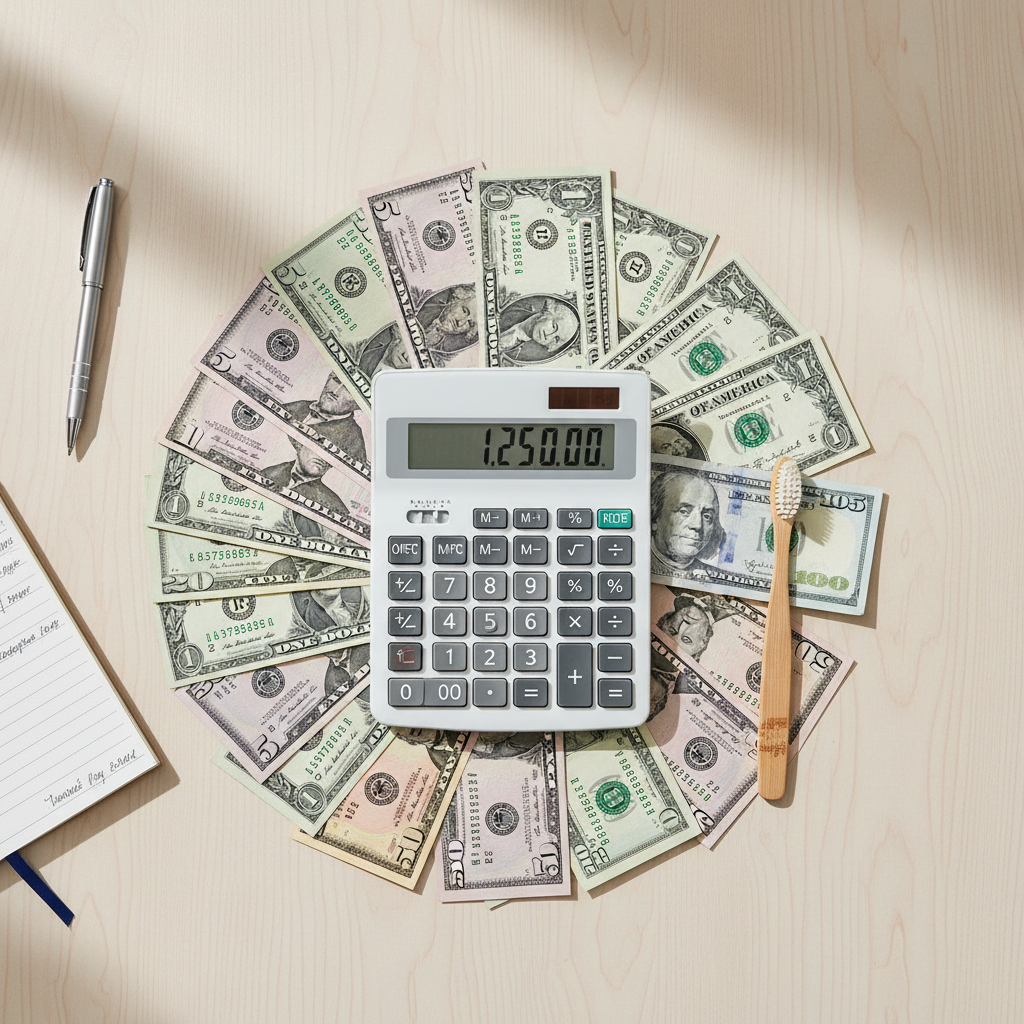
Dental tourism math only works when the dental procedure is large enough to absorb the fixed cost of international travel. For a $200 cleaning, it makes no sense. For an $800 crown, it's usually a wash after airfare and hotel. The break-even point for most US patients sits around $4,000–$5,000 in domestic treatment cost — below that, the savings rarely justify the logistics and clinical risk.
| Treatment type | Domestic cost | Abroad cost | Worth traveling? |
|---|---|---|---|
| Single filling | $200 | $60 | No — travel exceeds savings |
| Single crown | $1,400 | $400 | Marginal — savings ≈ trip cost |
| Root canal + crown | $2,500 | $700 | Marginal — only with another procedure |
| Single implant + crown | $4,500 | $1,500 | Possibly — if combined with vacation |
| Full arch (All-on-4) | $26,000 | $9,000 | Often yes — for healthy candidates |
| Full mouth restoration (20+ units) | $45,000 | $13,000 | Almost always — if case is suitable |
| Veneers (8–10 teeth) | $13,000 | $4,500 | Often yes — but pick cosmetic-focused clinics |
The Honest True-Cost Calculation
Every dental tourism quote is missing 6–8 costs. Run this calculation before deciding. We'll use a single-implant case in Cancun for an east coast US patient as the example.
| Procedure / Option | Low | High | Avg |
|---|---|---|---|
| Quoted implant + abutment + crown (Cancun) | $1,300 | $1,800 | $1,500 |
| Round-trip flights (2 trips, one for placement, one for crown) | $600 | $1,400 | $1,000 |
| Hotel (3 nights × 2 trips) | $360 | $1,200 | $600 |
| Local transportation, meals, incidentals | $200 | $500 | $350 |
| CBCT 3D scan (often charged separately) | $150 | $350 | $250 |
| Bone graft (commonly recommended on arrival) | $200 | $600 | $400 |
| Lost wages (3–5 days off work) | $600 | $2,500 | $1,200 |
| Travel medical / dental insurance rider | $80 | $200 | $120 |
| — ALL-IN total (Cancun, no complications) | $3,490 | $8,550 | $5,420 |
| — US baseline (same procedure, negotiated) | $3,000 | $5,500 | $4,000 |
U.S. national average ranges (without insurance), based on the ADA Health Policy Institute Survey of Dental Fees, FAIR Health Consumer, and CareCredit cost guides. Actual prices vary by region, provider, and case complexity — typically by 30–70%. Use these figures as a benchmark, then compare local quotes.
Top Destinations: An Honest Comparison
Each country has a clear "core competency" — the procedure type the leading clinics specialize in and where international standards are most consistently met. Going outside that lane materially raises your risk.
Mexico (Los Algodones, Tijuana, Cancún, Puerto Vallarta)
The largest and most established dental tourism destination for Americans. Los Algodones — a small border town across from Yuma, Arizona, with over 350 dental clinics in a 5-block area — handles an estimated 350,000 US patients annually. Best for: implants, dentures, large restorations. Most experienced clinics use US-equivalent implant brands (Nobel Biocare, Straumann, BioHorizons) and CBCT imaging. Many lead dentists trained in the US or Europe.
- •Drivable from Southwest US (no flights)
- •High clinical volume → experienced surgeons
- •English-speaking staff standard
- •Same-day appointments common
- •Average ~65% savings vs. US for implants
- •Clinic quality varies enormously block-to-block
- •Border wait times can add 2–4 hours
- •Limited recourse if something goes wrong
- •Lab quality varies — ask about US lab partnerships
- •Aftercare requires return trip or coordinating US dentist
Costa Rica (San José, Escazú)
Smaller but more clinically consistent than Mexico. PRODUS and several other clinics maintain Joint Commission International (JCI) accreditation — the same body that accredits US hospitals. Costa Rica's healthcare regulator (CMC) requires dentists to maintain continuing education comparable to US standards. Best for: comprehensive treatment plans, prosthodontics, full-arch restorations.
- •JCI-accredited clinics available
- •Strong dentistry education system
- •Excellent safety/health infrastructure
- •No malaria/tropical disease risk
- •Tourism makes recovery enjoyable
- •Higher prices than Mexico (~50% US savings vs. 65%)
- •Flights required (4–6 hrs from US)
- •6+ hour drive from main airport to some clinics
- •Smaller dental tourism volume = fewer reviews to verify
Hungary (Budapest, Sopron, Mosonmagyaróvár)
Europe's dental tourism capital, serving primarily UK, German, and Scandinavian patients. Hungarian dentists train under EU standards equivalent to or stricter than US standards. Best for: complex prosthodontics, full mouth, and aesthetic restorations. Lab quality is generally excellent — many top European dental labs are Hungarian.
- •EU regulatory standards (strict)
- •Excellent dental schools and training
- •Top-tier ceramic and zirconia labs
- •Strong cosmetic dentistry tradition
- •English commonly spoken in tourist clinics
- •Long flight from US (10–13 hrs)
- •Higher all-in travel cost vs. Mexico
- •8–12 hour time zone difference complicates aftercare calls
- •Per-procedure savings smaller than Mexico (~40–50%)
Colombia (Medellín, Bogotá, Cartagena)
Rapidly growing in the past 5 years. Several Medellín clinics now hold JCI accreditation. Best for: cosmetic dentistry (veneers, smile makeovers) and implants. Colombian dentists are well-trained, and labor cost differences yield genuine savings without compromising materials.
- •Strong cosmetic dentistry market
- •JCI accreditation available
- •Modern infrastructure in Medellín
- •Short flights from US East Coast (3–5 hrs)
- •Strong patient-experience focus
- •State Dept travel advisories vary by region
- •Local lab quality varies — confirm brand
- •Smaller volume = less peer-review data
- •Insurance coverage gaps
Thailand (Bangkok, Phuket, Chiang Mai)
A medical tourism powerhouse with world-class hospital-attached dental clinics. Bumrungrad International (JCI-accredited) and Bangkok Hospital Dental Center treat heads of state. Best for: complex full-mouth and prosthodontic cases. Thailand suits patients comfortable with longer travel and wanting to combine treatment with a longer vacation.
- •JCI-accredited hospital-grade clinics
- •World-class facilities and equipment
- •Strong English-speaking medical infrastructure
- •Excellent value for premium care
- •Modern aesthetic dentistry
- •Very long flight from US (18–24 hrs total)
- •Significant jet lag affecting recovery
- •High flight cost ($1,200–$2,500 round trip)
- •Far from US — emergency return is hard
- •Smaller US patient base means fewer local reviews
Procedures That Travel Well — and Ones That Don't
| Procedure | Travels well? | Why |
|---|---|---|
| Full mouth implants / All-on-4 | ✅ Yes | Large savings absorb travel; can be done in 1–2 trips |
| Implant-supported dentures | ✅ Yes | High cost differential; established protocols abroad |
| Smile makeover (8–10 veneers) | ✅ Yes | Cosmetic case has clear endpoint; predictable workflow |
| Multiple crowns/bridges (4+ units) | ✅ Yes | Big savings; one trip possible |
| Single implant | ⚠️ Marginal | Travel costs eat savings; requires 2 trips |
| Single crown | ⚠️ Marginal | Savings ≈ travel cost; risk/reward poor |
| Orthodontics (braces/Invisalign) | ❌ No | Requires 12–24 months of regular adjustments — impossible from abroad |
| Root canals (alone) | ❌ No | High follow-up complication rate; needs local accessibility |
| Complex periodontal surgery | ❌ No | Long healing + multiple follow-ups required |
| Pediatric dentistry | ❌ No | Behavioral familiarity and ongoing relationship matter |
| Emergency dental care | ❌ No | Time-critical — local always wins |
How to Vet a Foreign Dental Clinic (12-Point Checklist)
The Real Risks (and How They Materialize)
Most patients who travel abroad for dental care report satisfactory results. But when problems occur, they often occur in a difficult-to-fix combination. Knowing the failure modes helps you prevent them.
Clinical Risks
Logistical and Recovery Risks
- •Flying within 24–48 hours of oral surgery raises risk of dry socket and post-op bleeding
- •Jet lag impairs healing and immune response
- •Local pharmacy access for prescribed antibiotics/painkillers may be limited
- •Language barrier can cause critical post-op instructions to be misunderstood
- •Limited recourse if symptoms develop after returning home
- •Insurance generally won't cover complications from elective foreign procedures
- •US dentists may decline to "rescue" foreign work to avoid liability exposure
Legal and Financial Risks
Malpractice systems in most dental tourism destinations are weaker than in the US. Damages awards, where available, are typically capped well below US averages, and pursuing a claim abroad is logistically difficult and expensive. Health insurance — including most international travel medical riders — generally excludes complications from elective procedures. If a foreign implant fails 18 months in, you are likely paying out of pocket to fix it.
Pre-Travel Preparation Checklist
Domestic Alternatives Most People Don't Explore
Before booking that flight, run through these US-based options. For many patients, they close 40–70% of the cost gap without the travel risk.
Decision Framework: Is Dental Tourism Right for You?
Run through this honestly. The more "yes" answers, the better a candidate you are for dental tourism. Strong "no" on any of the first 4 is usually disqualifying.
| Question | Better candidate if... | Worse candidate if... |
|---|---|---|
| Treatment cost domestically | Over $8,000 | Under $4,000 |
| Procedure type | Implants, full-mouth, veneers | Ortho, root canal, kids, emergency |
| Medical complexity | Healthy, no major medical issues | Diabetes, heart disease, immune issues |
| Available time off work | 7–10 days flexible | Less than 5 days |
| Aftercare network | Have a US dentist willing to support | No identified aftercare provider |
| Risk tolerance | High; comfortable with uncertainty | Low; need maximum recourse |
| Domestic options explored | All alternatives priced & ruled out | Have not gotten 2nd/3rd US opinions |
| Language/cultural comfort | Have visited destination before | First-time international travel |
Accreditation & Standards Glossary
Frequently Asked Questions
The Honest Bottom Line
Dental tourism is neither the bargain miracle of marketing copy nor the cautionary horror story of TV news segments. For the right patient with the right case — typically a healthy adult with a large prosthodontic or implant case over $8,000 domestic baseline — well-chosen international clinics deliver good outcomes at real savings. For the wrong patient or wrong case, the math breaks down quickly and the recovery risk is real.
Before traveling, exhaust your domestic options. Get 3 US quotes, including from one growth-phase clinic and one dental school. Run the true-cost math honestly. Find an aftercare provider. Vet the foreign clinic with the 12-point checklist. If the savings still justify the work after all of that — dental tourism can be a smart financial decision. If not, you've discovered why most Americans ultimately get their dental care close to home.
About the author
Independent dental-content editorial team
Our editorial team researches, drafts, and fact-checks every article against peer-reviewed dental literature and primary government sources (NIH, CDC, NIDCR, ADA). We do not employ practicing dentists, and we never let any office pay to influence editorial content or rankings — see our editorial standards.
Sources & References
This article is based on guidance from accredited dental and health organizations:
- American Dental Association (ADA) — Statement on Dental Tourism
- U.S. Centers for Disease Control and Prevention (CDC) — Medical Tourism — Travelers' Health
- Joint Commission International (JCI) — Internationally Accredited Healthcare Organizations
- American Academy of Implant Dentistry (AAID) — Patient Resources on Implant Standards
- U.S. Department of State — Travel Advisories for Medical Travelers
- World Health Organization (WHO) — Cross-Border Healthcare Quality Standards
- Federación Dental Internacional (FDI World Dental Federation) — Global Standards in Dental Practice
Last reviewed: May 2026
Medical disclaimer: This content is for educational purposes only and is not a substitute for professional dental advice, diagnosis, or treatment. Always consult a licensed dentist for personalized guidance about your oral health.
Get the top dental deals in your city — every Wednesday
5 verified deals + 1 cost guide. Free. You'll get your first deals instantly.